Attendance/Absence
At Hillcross we want all of our children to get the very best education, and the building blocks for a great education begin with them coming to school each and every day. If your child misses school regularly, they miss out on learning the fundamental skills that will set them up for success in the later years of school. There is no safe number of days for missing school – each day a child misses puts them at a disadvantage and can affect their educational outcomes.
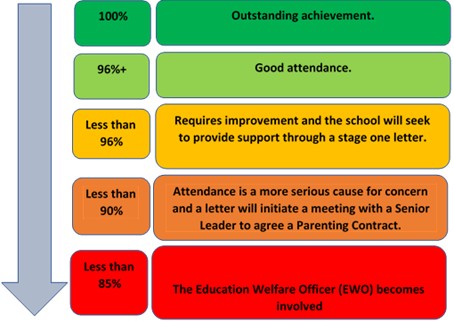
The table below sets out the attendance targets and at what stage parents/carers will be contacted about their child's attendance.
We value our partnership with families and believe that open communication is the best way to support your child’s attendance. If you are having attendance issues with your child, please let your class teacher know so that we can work together to get your child to school every day.
Unplanned Absence
If your child is unwell, please notify us by 9:00 am on the first day of absence via the MCAS app or our dedicated absence line. When reporting, please provide specific details regarding their symptoms (e.g., "high temperature" or "stomach upset") rather than just stating they are "unwell." This ensures we can accurately code the register and provide the right support.
Planned Absence
We encourage parents/carers to make medical and dental appointments outside of school hours when possible. Where this is not possible, the pupil should be out of school for the minimum amount of time necessary. Attending a medical or dental appointment will be counted as authorised as long as the pupil’s parent/carer notifies the school in advance of the appointment. Evidence of appointments (e.g. letter/appointment card) will be requested in order for the school to accurately record the absence on the attendance register.
For information about requesting term time absence due to exceptional circumstances, click on the link on the right.
Poor attendance can suggest that the child or family are experiencing difficulties in other areas of their life, or can be an indicator of safeguarding or child protection concerns. Designated Safeguarding Leads will be kept informed of any attendance issues so that they can be monitored alongside any other concerns that are raised.