Summer 1
Week 5 & 6
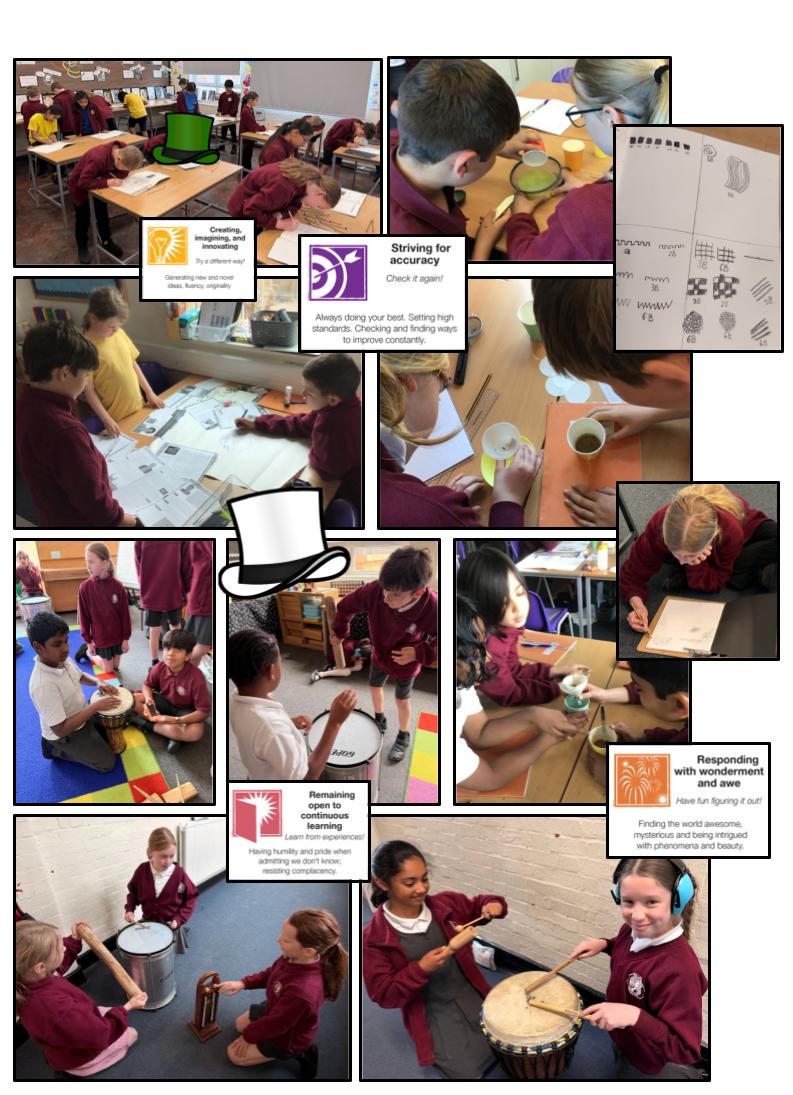
During the final two weeks of the first half of the summer term, Year 5 continued their scientific exploration of reversible changes. Applying their prior scientific knowledge and problem-solving skills, the children were challenged to independently separate a mixture of sand, salt, and paper clips. As writers, the children have been mastering the techniques of biography writing. After selecting and researching a famous person of their choice, they began composing their own engaging biographies. As musicians, the children created complex rhythms to accompany their original melodies, effectively bringing the ancient Maya story of the Hero Twins to life through sound. Finally, as artists, the pupils have been developing their line-work techniques to create intricate patterns. They beautifully applied these new skills to produce vibrant Maya jungle scenes, inspired by the distinctive style of Henri Rousseau.
Week 4
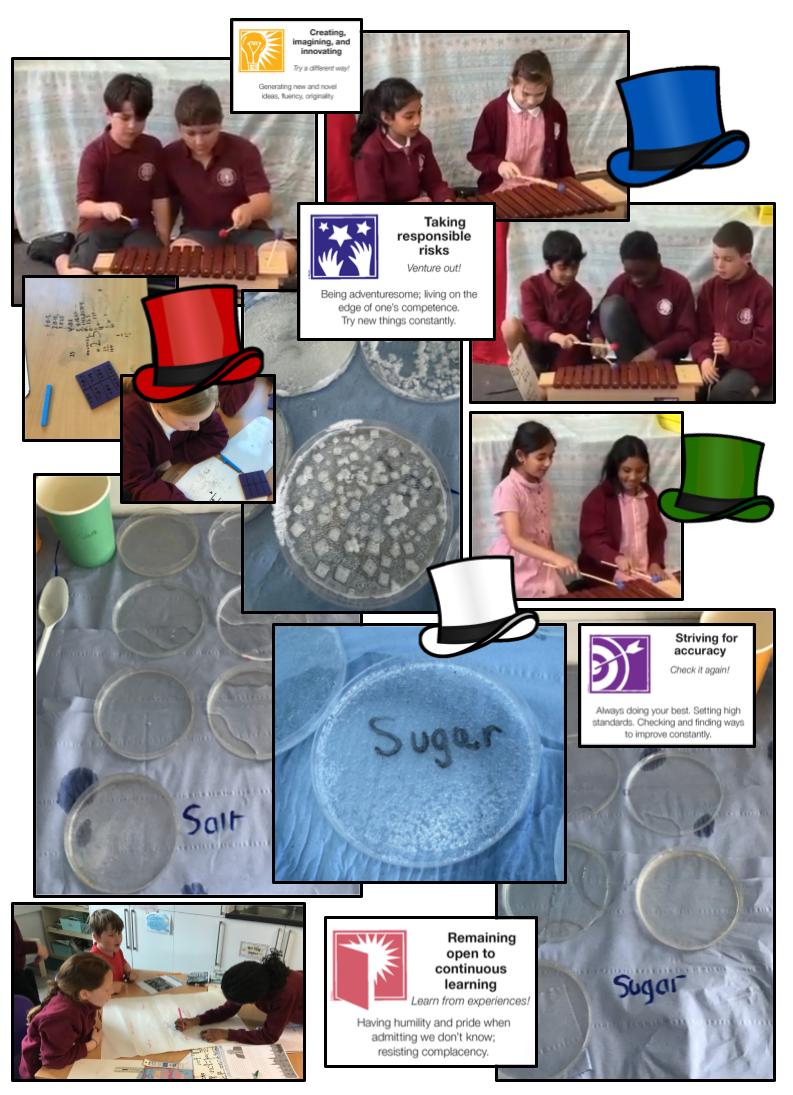
Although this week was only four days due to the bank holiday, we have still managed to pack it full of exciting learning in Year 5. As mathematicians, children have been learning how they can apply their knowledge of equivalent fractions and decimals to make calculations easier, and they were introduced to the idea that "percent" means out of one hundred. As chemists, we continued to investigate how to separate a solid from water, specifically focusing on solids that have dissolved to form a solution. We discovered that if we leave the water to evaporate, the solid remains in the dish, helping us understand that dissolving is a reversible change. Finally, as musicians, children have been composing their own melodies on the xylophone, rearranging notes to create tunes they were happy with.
Week 3:
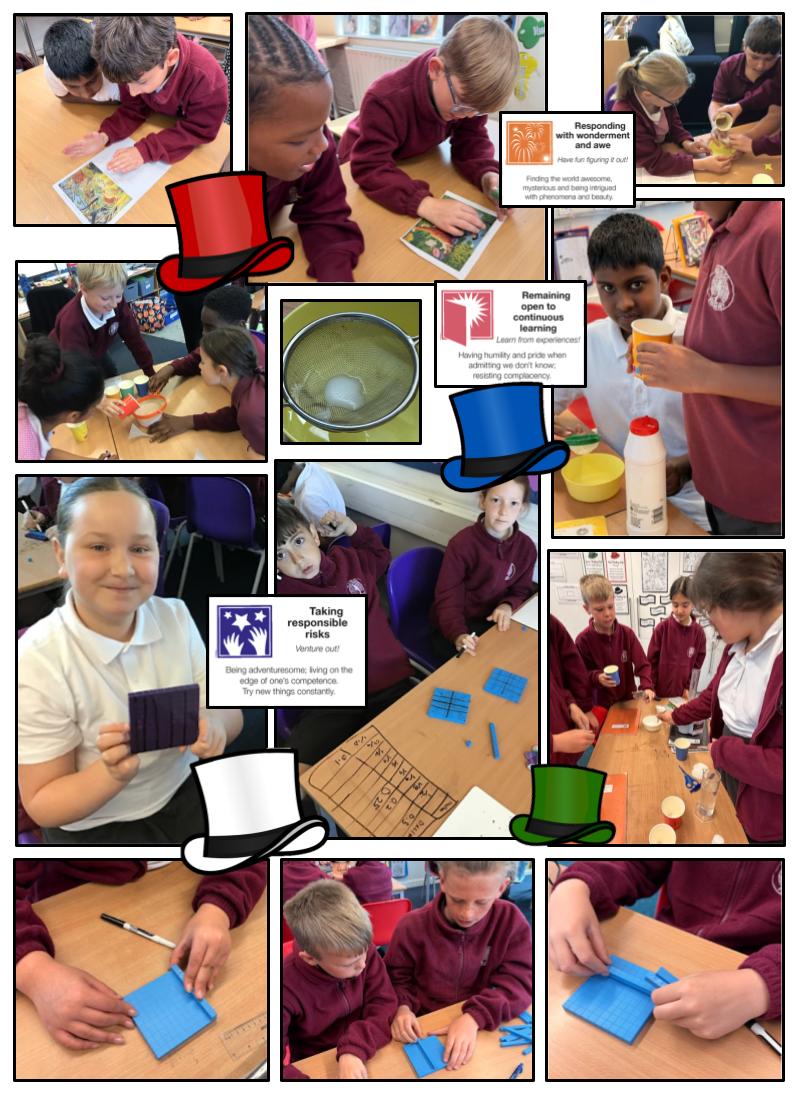
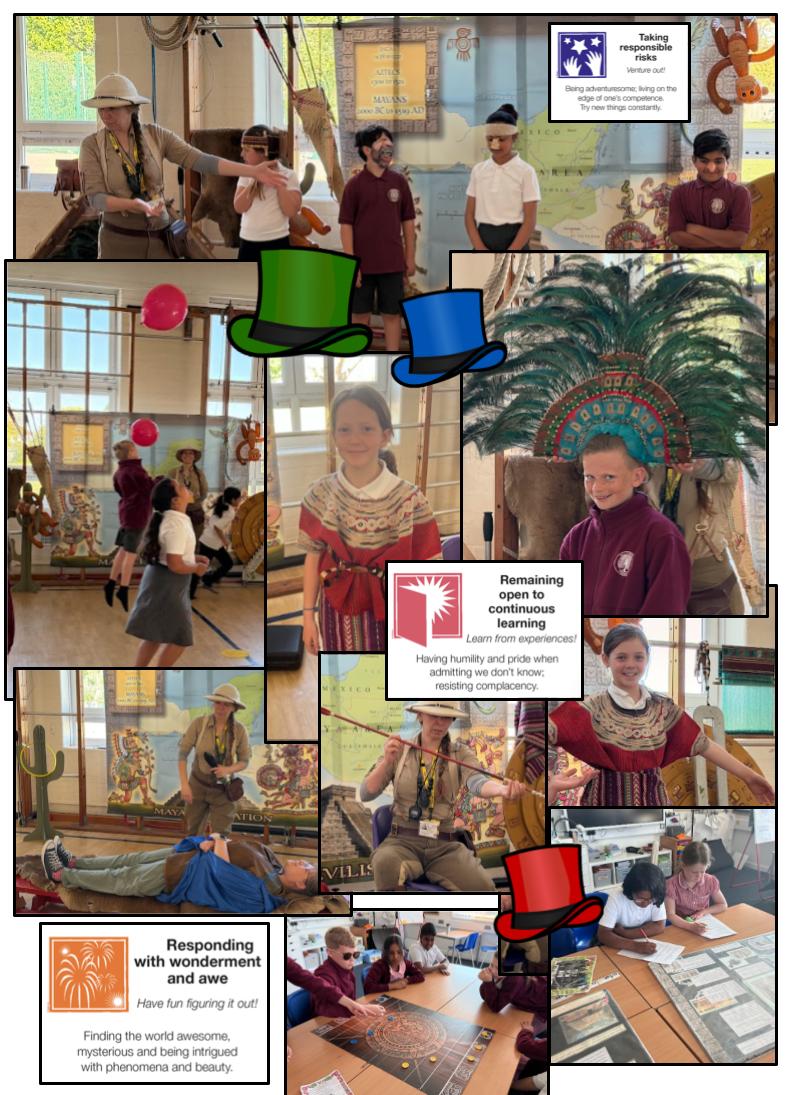
It has been another action-packed week in Year 5, with our pupils diving deep into their roles as mathematicians, scientists, and historians. This week, our focus remained on mastering equivalent fractions. To help bring these abstract concepts to life, the children used Dienes blocks to visualise the relationship between fractions and their decimal equivalents. As chemists, we continued our investigation into solids through experiments. The children discovered that insoluble materials such as sand and paper clips can be separated from water by filtering and sieving but soluble materials, such as salt and sugar cannot. We finished the week by travelling back in time! We were joined by ‘Portals of the Past’ for a spectacular Maya workshop where the children were fully immersed in the culture and beliefs of this ancient civilisation. Highlights included: Competing in a high-stakes game of Pok-a-Tok, exploring Maya rituals and daily life and in a dramatic finale, Mrs Catterall was "sacrificed," with her beating heart offered to the Maya Gods to ensure the sun would rise again tomorrow!
Week 2:
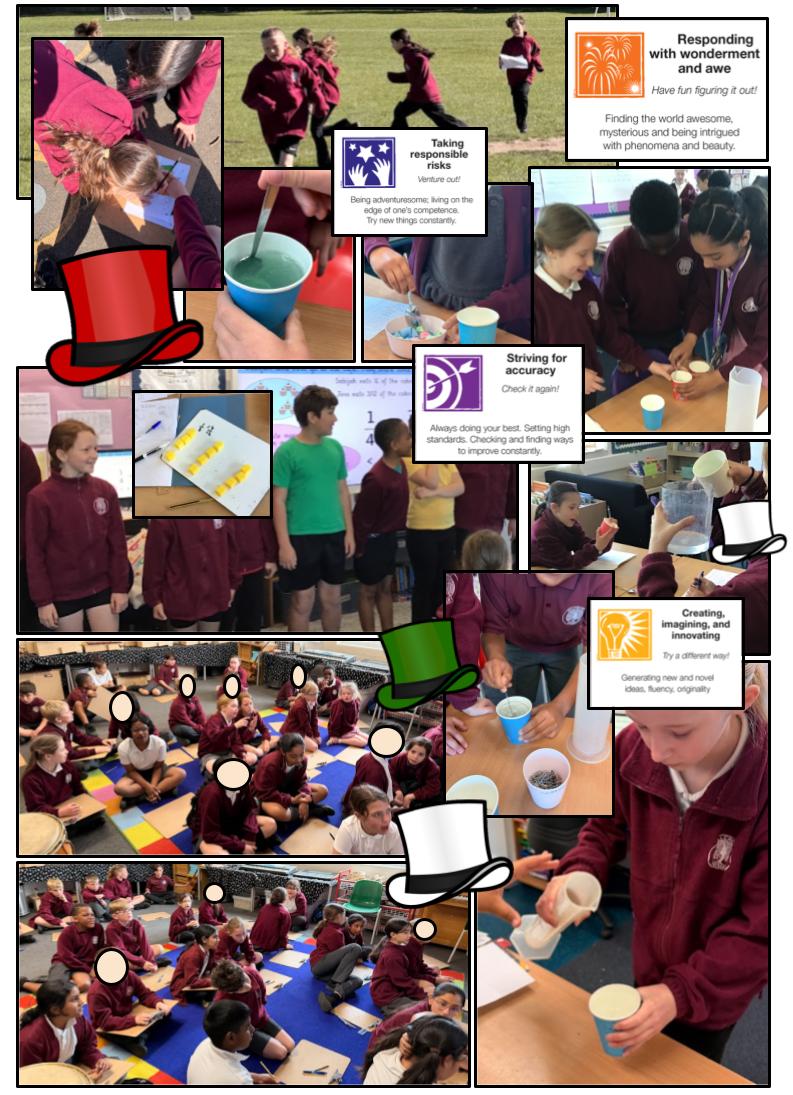
Continuing to develop their map reading and orienteering skills in PE, Year 5 students have been practising the ‘Point-to-Point’ strategy, navigating specific routes to visit markers in a precise order. As chemists, the children have applied their observational skills to investigate solubility, determining which solids dissolve in water to form a solution and which do not. In Mathematics, our pupils have been deepening their understanding of equivalent fractions. They have discovered that if the vertical or horizontal relationship between the numerator and the denominator remains consistent, the fractions are equivalent. Finally, as musicians, the year group has been exploring the rich history and unique structures of Ancient Maya music.
Week 1
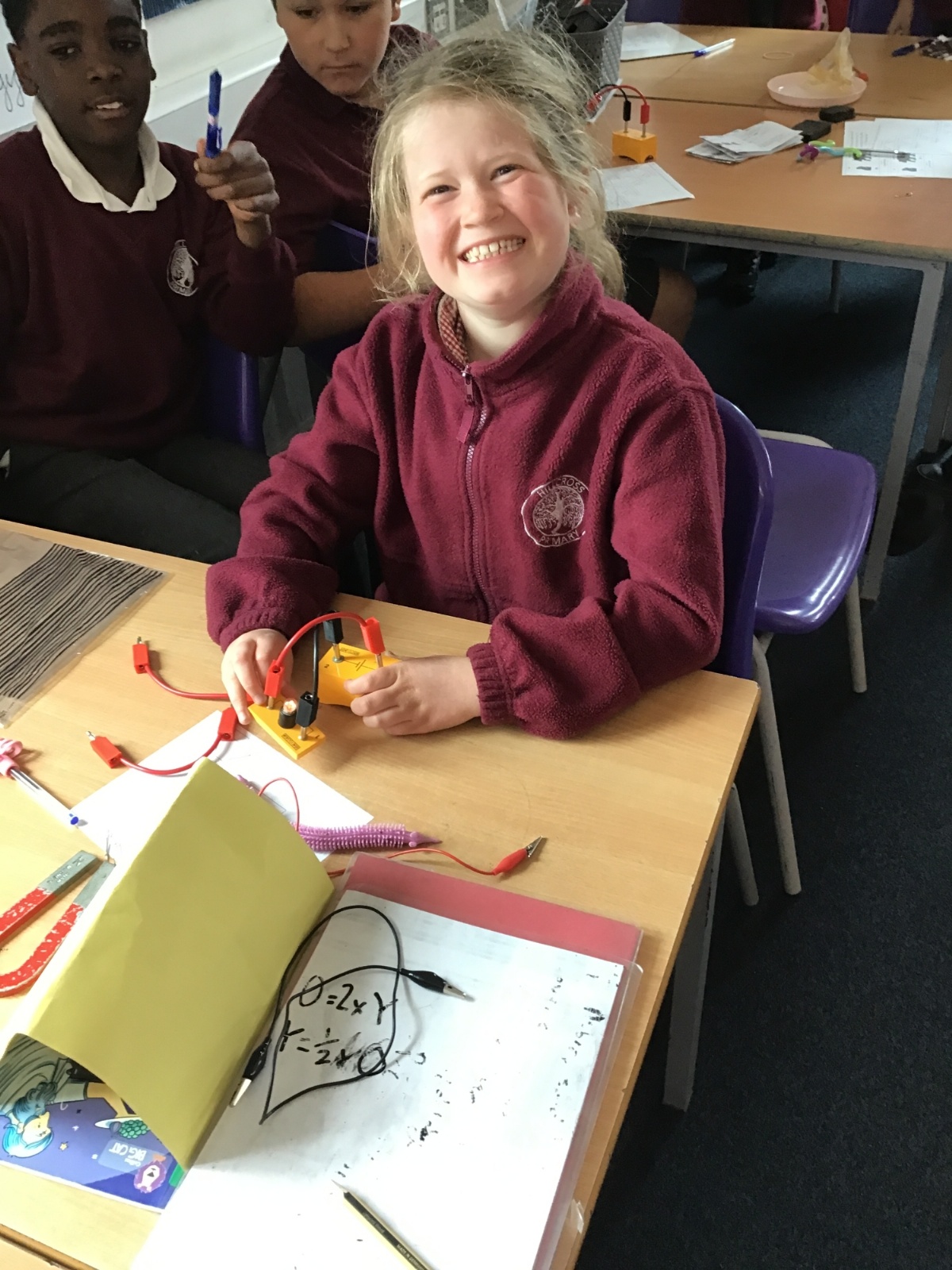
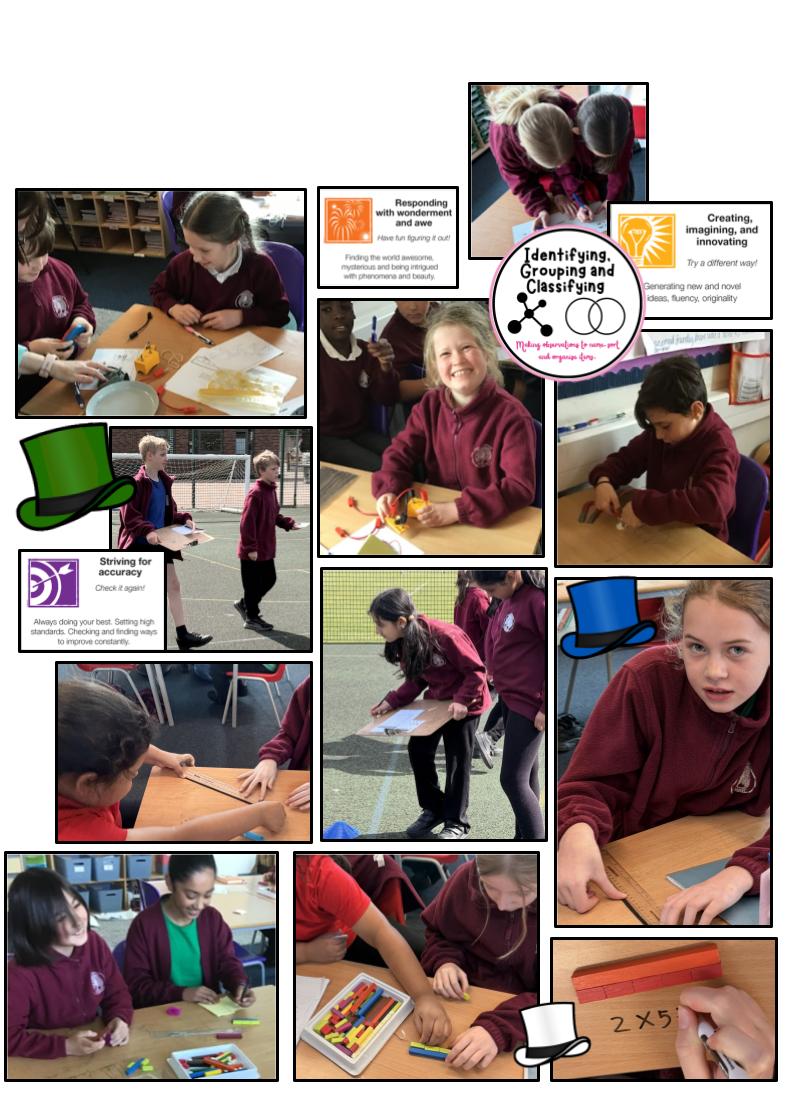
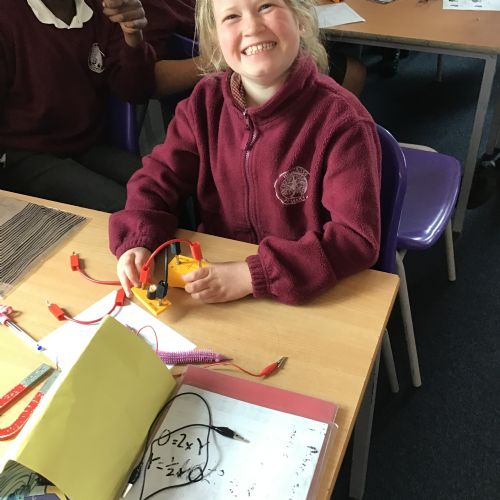
Enjoying the spring sunshine, Year 5 began the term by developing their map reading and orienteering skills in PE as part of the Outdoor and Adventurous Activities (OAA) module. Revisiting and recapping their knowledge of materials from previous years, the pupils used the scientific enquiry skills of identifying, grouping, and classifying to sort materials according to their magnetic, transparent, electrical, and thermal properties. As mathematicians, the children explored how to use multiplication and division to solve comparison problems, using concrete resources such as Cuisenaire rods and elastic.
 IMG8330.JPG4202