Phase 2 (Year 4-6) Writing
When teaching NARRATIVE writing, Phase 2 continue to build on the 'Talk for Writing' approach, combined with sequences of learning where students make notes at the top of their page with key vocabulary and phrases called their 'Thinking Side''. They can then refer to this and use these ideas in their own writing. This provides a carefully structured pedagogical approach that enables whole class teaching to support less able writers whilst simultaneously stretching more able writers. This follows a method called "Sentence Stacking" which refers to the fact that sentences are stacked together chronologically and organised to engage children with short, intensive moments of learning that they can then immediately apply to their own writing. Children are challenged to ‘Deepen the Moment’ which requires them to independently draw upon previously learnt skills and apply them to their writing during that chunk.
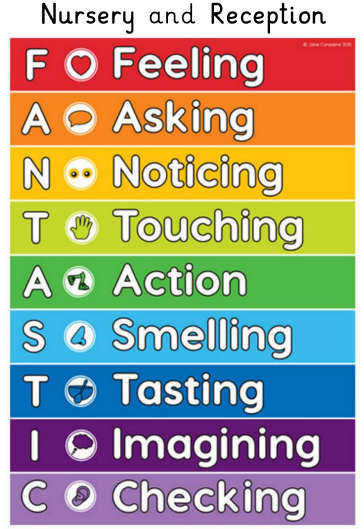
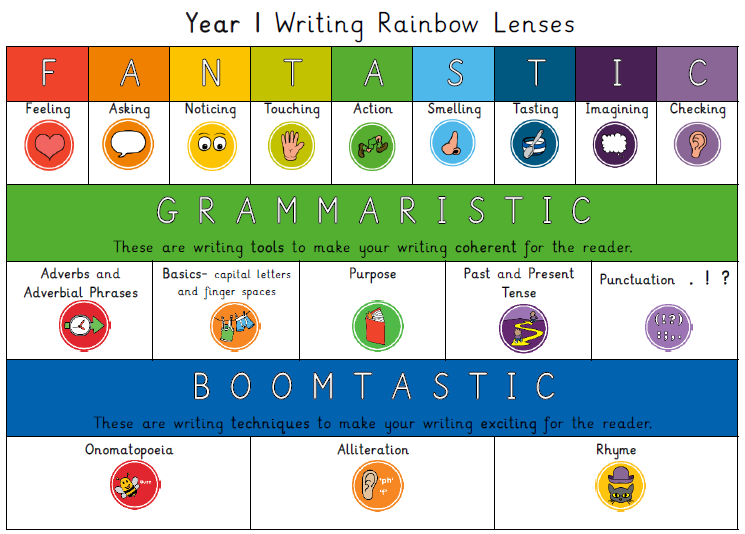
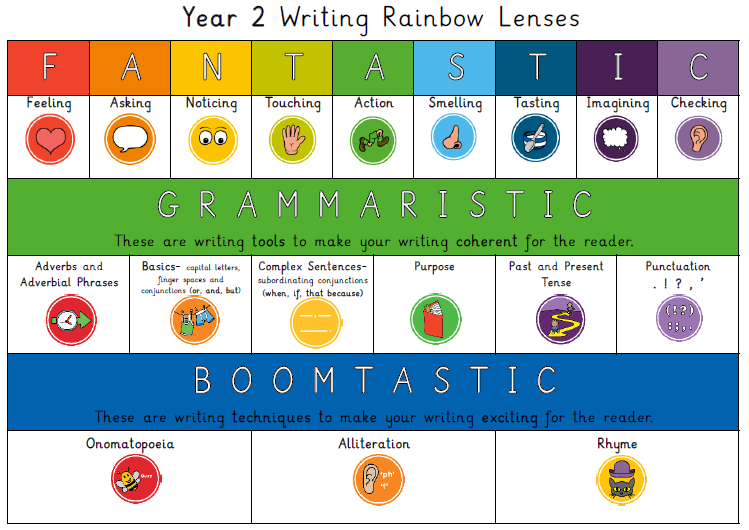
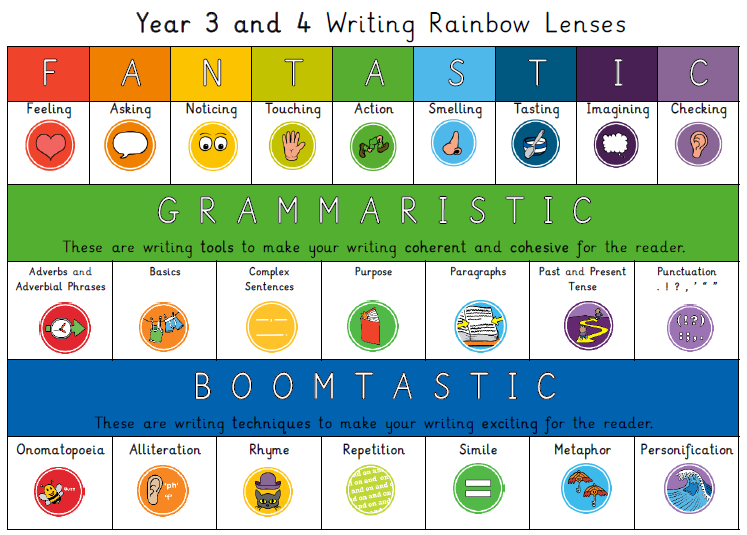
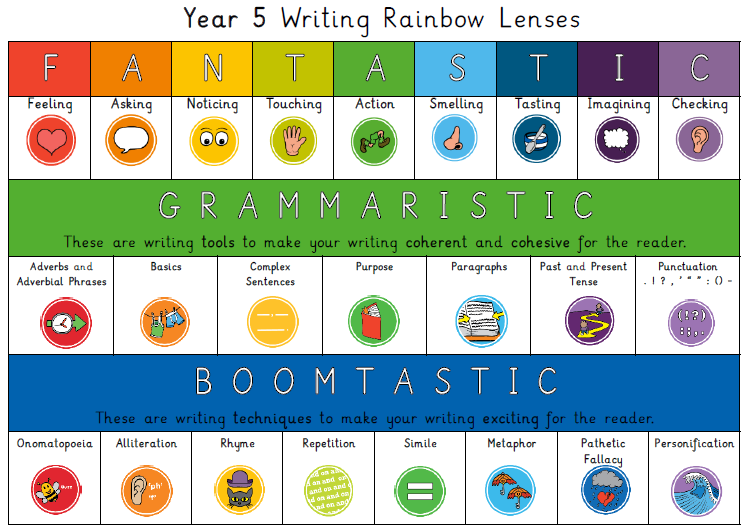
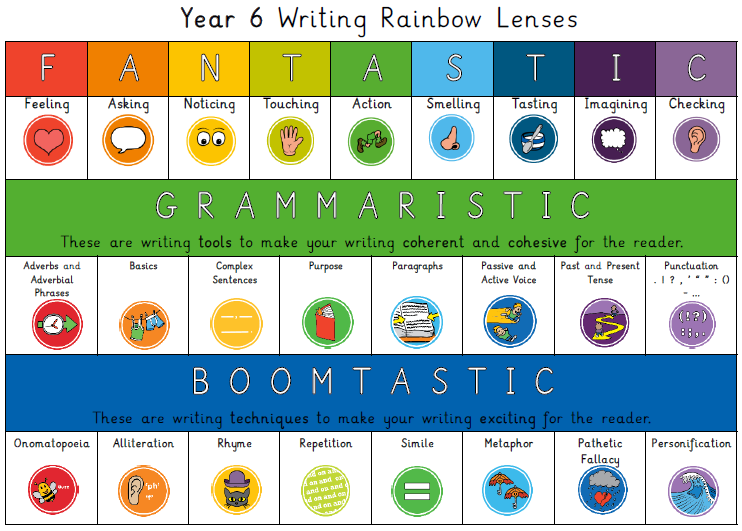
To help children see writing skills visually, we are using a 'Writing Rainbow' with these writing 'lenses' on. This will look slightly different in each year group to show the progression of writing skills in grammar:
Progression
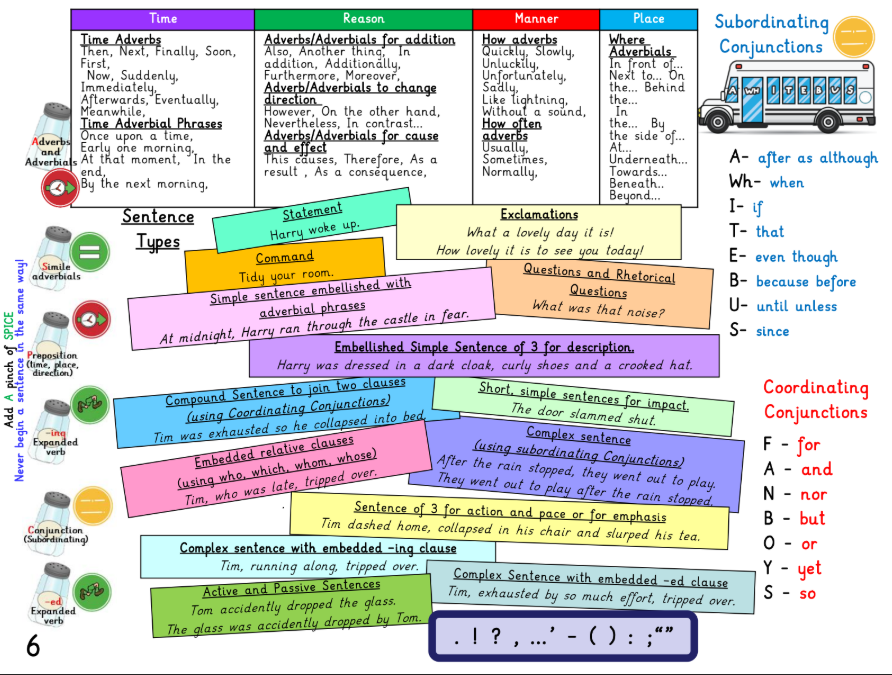
Each year group has a 'Writing Progression' poster which details all the necessary skills children need to be confident in by the time they reach the end the year. They are stuck in the frotn of English books and displayed in classrooms. Below is an example of Year 6:
Follow this link to an example of a Year 5 Narrative Writing Lesson
The Teaching of Non-Fiction Writing
To ensure children become successful writers, we ensure teaching and learning addresses all elements of the writing process. Every half term, children will be exposed to a non-fiction and fiction genre. At the start of the process for non-fiction, teachers will share a WAGOLL text (what a good one looks like) with the appropriate blocked writing skills. Following this, children will spend a series of lessons immersed in this genre through:
-
Pupils having lots of exposure to good models for writing before they write themselves to allow them to learn and understand the explicit features and grammar techniques of each text type.
-
Plenty of discussion and modelling; pupils are subsequently encouraged to compose mentally and verbally, then to practise the writing style in talk partners and as a class before writing independently.
-
Building in and clarifying explicit and quantifiable success criteria to act as further support and challenge for independent writing.
-
Applying the FANTASTIC lenses and CHOTTING within lessons, where appropriate.
Following the explicit teaching of narrative and non fiction, children will have the opportunity to apply learnt skills to independent writing within the same genre. Therefore, every half term children will have an independent non-fiction and fiction piece of work completed in their assessed writing books.
‘What is important is that children are writing following the writing process each time they write, with time to evaluate what they’ve written, receive diagnostic feedback, and then make changes to improve it… Effective feedback, both oral and written, is how children learn to be better writers’
James Clements