- Home
- Our Learning
- The Hillcross Curriculum
- Early Years Foundation Stage
- Personal, Social and Emotional Development.
Personal, Social and Emotional Development.
PSED is one of the three Prime areas within the Early Years Foundation Stage (EYFS). Each Prime area is divided into Early Learning Goals. For PSED these are:
- Self-confidence and self-awareness -
Children are confident to try new activities, and say why they like some activities more than others. They are confident to speak in a familiar group, will talk about their ideas, and will choose the resources they need for their chosen activities. They say when they do or don't need help. - Managing feelings and behaviour - children talk about how they and others show feelings, talk about their own and others' behaviour, and its consequences, and know that some behaviour is unacceptable. They work as part of a group or class, and understand and follow the rules. They adjust their behaviour to different situations, and take changes of routine in their stride.
- Making relationships - children play cooperatively, taking turns with others. They take account of one another's ideas about how to organise their activity. They show sensitivity to others' needs and feelings, and form positive relationships with adults and other children.
At Hillcross we ensure that:
- We support children as they find their own different ways to manage feelings of sadness when their parents leave them. Some children might need to hold onto a special object/picture from home to feel strong and confident in the setting or use our bounce back zones.
- Help all children to feel that they are valued, and they belong.
- We respond to children’s increasing independence and sense of responsibility. As the year proceeds, we increase the range of resources and challenges both outdoors and inside.
- Support children in being responsible for themselves and their belongings throughout their time in the EYFS.
One of the ways we promote PESD at Hillcross is by using our You Can Do It token system.
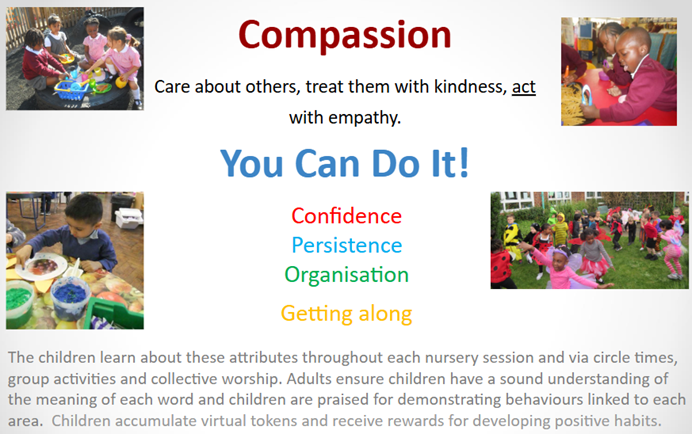
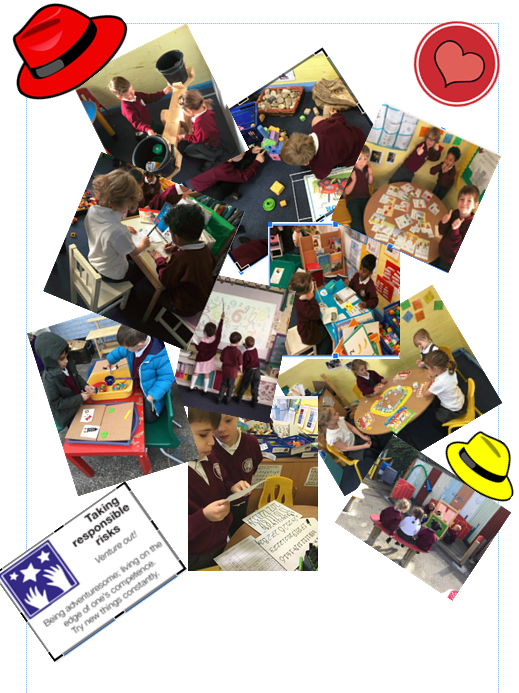
This is what PSED looks like within our EYFS.
Growing Independent: Self-Help Skills in the Early Years
In the Early Years Foundation Stage (EYFS), learning isn't just about reading and counting. Developing self-help skills is a vital part of the UK curriculum under the Personal, Social and Emotional Development (PSED) and Physical Development frameworks.
The Department for Education (DfE) emphasizes that independence in self-care boosts a child's confidence, well-being, and readiness to learn. Here is how we teach these essential skills at school, alongside government-backed guidance to help you reinforce them at home.
1. Toilet Training
The statutory EYFS framework requires schools to meet children’s basic needs while maintaining their privacy and dignity. We view toilet training as a shared journey based on a child's physical readiness, not their age.
-
What we do at school: We provide child-sized toilets and easy-to-use step stools. We use visual routines to remind children to try the toilet at regular intervals and establish good hand-washing habits.
-
DfE & NHS Recommendations: * Look for readiness: The NHS notes most children are physically ready between 18 months and 3 years. Signs include staying dry for 1 to 2 hours and recognising the physical sensation of needing to go.
-
Be consistent: Use the exact same words for 'wee' and 'poo' at home and school.
-
Dress for success: Send your child to school in clothes that are easy to pull down independently (avoid stiff buttons, belts, or dungarees).
-
The new Government-backed guide to when and how to potty train your child can be found here.
2. Eating with Cutlery
Developing the ability to use a knife, fork, and spoon is a key element of Physical Development (Fine Motor Skills) in the EYFS.
-
What we do at school: During snack and lunchtimes, staff sit with the children to model good table manners and correct cutlery grip. We encourage children to scrape their own plates and pour their own water from small jugs.
-
Government & NHS Recommendations:
-
Start with the right tools: The NHS recommends using child-sized, metal cutlery rather than plastic, as the slight weight and sharper edges make it easier to pierce food successfully.
-
Praise the effort, ignore the mess: Learning to steer a fork takes time. Encourage your child to feed themselves at home, even if it takes longer or gets untidy.
-
Build hand strength: You can build the hand strength needed for cutlery away from the dinner table through finger-painting, using playdough, and building with Lego.
-
3. Toothbrushing
The DfE statutory framework includes a specific requirement for early years providers to promote the oral health of children.
-
What we do at school: We teach children about dental hygiene through stories, playful role-play with giant teeth and brushes, and discussions about "everyday" vs. "sometimes" foods.
-
NHS Oral Health Guidance:
-
Two minutes, twice a day: Children should brush their teeth last thing at night and at least one other time during the day using a pea-sized amount of fluoride toothpaste.
-
Supervision is key: The NHS advises that adults should supervise toothbrushing until a child is at least 7 years old to ensure they are reaching every surface and spitting out the toothpaste rather than swallowing it.
-
Don't rinse: Remind your child to spit, don't rinse with water after brushing. Rinsing washes away the protective fluoride.
-
More information from the NHS can be found here.
Working Together
Children thrive when home and school life mirror each other. If you are currently navigating toilet training or struggle with picky eating at home, please let your child's key person or class teacher know. By aligning our approaches, we can help your child feel secure, confident, and independent!
How to help your child at home:
Emotions
Support children to name their emotions during the daily routine. For example:
- Use feelings cards to ask children how they are when they arrive, involving parents and carers where possible.
- Talk about how your child feels within your family or when with friends.
- Use feelings cards when children try tricky new things, like climbing or building something, or during a time of day they find difficult.
- When there are conflicts, use feelings cards for children to express and name their related emotions.
- When sharing a story, song or activity which mentions a particular emotion, use feelings cards to connect children to it.
Sense of self
- Develop a positive sense of self, set themselves simple goals, have confidence in their own abilities, persist and wait for what they want and direct attention as necessary.
- Playing games together as a family to enjoy waiting their turn.
- Through adult modelling and guidance, they will learn how to look after their bodies, including healthy eating, and manage personal needs independently.
- Through supported interaction with other children, they learn how to make good friendships, co-operate and resolve conflicts peaceably.
- These attributes will provide a secure platform from which children can achieve at school and in later life.